 character
2:3
character
2:3
Lipstick Shade Try-On Infographic Report
Subject
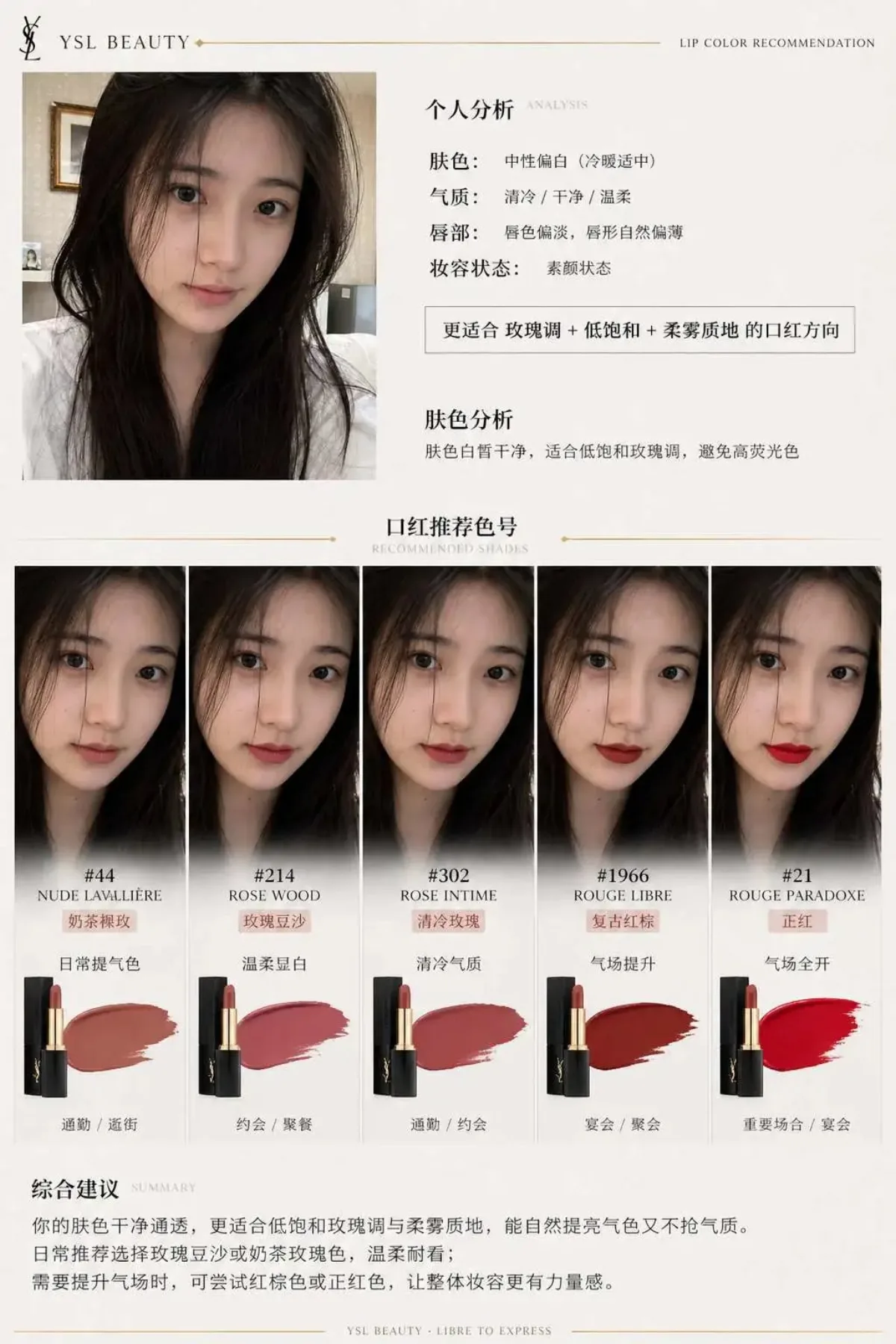
A brand-toned 'lipstick recommendation report infographic' built from the user's uploaded selfie and a specified lipstick brand (Dior / YSL / Armani / Chanel / Tom Ford), centered on a lip-color try-on matrix of 3-5 shades on the same consistent face.
Composition
Vertical infographic. Top-left user input zone (real selfie plus 'skin-tone analysis' label and one-line conclusion). Top-right analysis conclusion. Center core try-on matrix (60%+ of the frame): each column is one shade — small face image with varied lip color, shade name, color-family tag, one-line effect note, arranged horizontally or in a neat grid. Bottom summary recommendation.
Lighting
Brand-driven lighting per brand — soft glow (Dior), strong contrast (YSL), unified gray low-contrast (Armani), strict minimal black-white (Chanel), local dark backdrop with highlight emphasis (Tom Ford); consistent lighting across all faces.
Setting
Brand-toned background with subtle variation, not large flat color fills; refined fine brand-color hairlines (e.g. YSL gold line, Dior gray line).
Style
Beauty-fashion editorial blockbuster quality plus structured information visualization deeply fused with the brand's visual identity; minimal but not monotonous, premium with visual hierarchy; no rounded-corner card UI, no thick borders.
Details
Analyze skin tone (cool/warm/neutral plus brightness), temperament, lip features, makeup state; output a direction like 'better suited to [color family] plus [saturation] plus [texture] lipstick.' Recommend 3-5 clearly differentiated shades (one everyday, one statement, one ambient) with color-family, on-face effect and scene tags (shopping/commute/dining/date/banquet). All faces identical, only lip color changes, realistic try-on, real skin, no plastic look. Use brand accent color only as refined accents on shade titles, dividers and small icons. Bottom gives a judgment-based recommendation tailored to the user's actual skin tone (do not copy the examples). Apply hierarchy contrast, micro-contrast (thin lines, gray-value differences, weight changes) and rhythm (density variation, module breathing).